
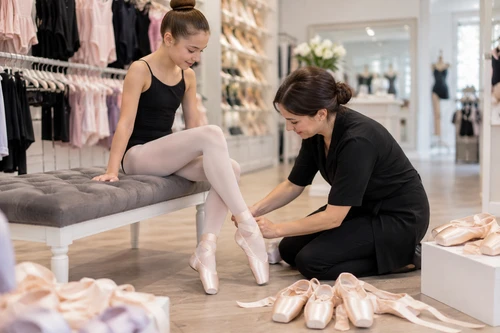
First Pointe Shoe Fitting: What to Expect and What to Bring
Posted by 4 Dance on 17th Sep 2026
First Pointe Shoe Fitting: What to Expect and What to Bring
A first pair of pointe shoes is an exciting milestone for a dancer, but the fitting itself can feel unfamiliar if you do not know what to expect.
Unlike buying many other types of dance footwear, choosing pointe shoes involves looking at much more than your usual shoe size. Different brands and models can vary in shape, width, vamp, shank and overall fit, which is why a specialist fitting gives you the chance to try different options and understand how they feel on your feet.
If your teacher has confirmed that you are ready to begin pointe work, here is what you can expect from your first fitting and how you can prepare for the appointment.
Before Your First Pointe Shoe Fitting
Your ballet teacher should be your first point of reference before buying your first pair of pointe shoes.
They can confirm when they would like you to start pointe work and let you know about any particular requirements for your classes or school.
Before your fitting, it is useful to find out whether your teacher has given you any guidance about:
-
the type of pointe shoe required;
-
colours or uniform requirements;
-
padding or toe protection;
-
any school or syllabus preferences you should mention to the fitter.
You do not need to choose a brand or model before your appointment. One of the purposes of a fitting is to explore different options rather than assuming that one particular pointe shoe will be right for you.
What Should You Wear to a Pointe Shoe Fitting?
Wear comfortable, close-fitting dancewear that allows you to move easily.
Convertible ballet tights or ballet socks can be particularly useful because the fitter may need to see your feet clearly as part of the fitting process.
Avoid clothing that makes it difficult to see your feet, ankles or lower legs when you move.
The aim is simply to make it easy for you to try shoes comfortably and for the fitter to see how each option looks and feels when you are standing and moving.
What Should You Bring?
For a first fitting, you usually do not need to arrive with lots of equipment.
It can, however, be helpful to bring:
-
any guidance your ballet teacher has given you;
-
the tights or socks you expect to wear with your pointe shoes;
-
any toe pads or other padding your teacher has specifically asked you to use;
-
details of any uniform or examination requirements that could affect your choice.
If you are attending a future refitting rather than buying your first pair, bringing your current or previous pointe shoes can also give the fitter useful context.
What Happens During a First Pointe Shoe Fitting?
Every dancer is different, so there is no single pointe shoe that works for everyone.
At the start of the fitting, the fitter will normally need to understand that this is your first pair and may ask about your training, teacher guidance and how the shoes feel as you try them.
You can then expect to try several different shoes.
That does not mean anything is going wrong. Comparing different shapes, sizes and models is a normal part of finding an option that suits the individual dancer.
You may also be asked to stand or perform simple ballet movements while wearing the shoes so the fitter can see how they behave when you move.
Throughout the fitting, tell the fitter clearly how each shoe feels.
They can see how a shoe fits from the outside, but only you can describe what you feel inside it. If something feels uncomfortable, unusually tight or simply different from another shoe you have tried, say so.
A pointe fitting should be a conversation rather than a test.
Why Might You Try Several Brands of Pointe Shoe?
Pointe shoes can vary considerably between brands and even between different models from the same brand.
Differences can include the shape of the box, the width of the shoe, the vamp, the profile and the strength or feel of the shank.
For a first-time pointe dancer, those terms and differences can initially feel quite technical.
You do not need to arrive knowing exactly what each one means or which specification you need.
A specialist fitting allows the options to be compared on your own feet instead of choosing a shoe simply because you recognise the brand or like how it looks.
4Dance stocks pointe shoes from multiple recognised brands, giving the fitting process access to a range of different options.
You can also browse the current pointe shoe range before your appointment if you would like to see the brands and models available, although your fitting should guide the final choice.
Does Your Normal Shoe Size Tell You Your Pointe Shoe Size?
Your usual street-shoe or ballet-shoe size can provide useful background information, but it should not be treated as the answer to which pointe shoe you need.
Sizing systems differ between brands and models, and the overall shape and fit of the shoe matter as well as its labelled size.
This is one reason it is useful to approach a first fitting without being fixed on a particular size or model.
The objective is to compare the available options and find a shoe that works appropriately for the individual dancer.
Should You Choose a Pointe Shoe Because a Friend Wears It?
Not necessarily.
It is completely natural for dancers to notice what their friends, teachers or favourite dancers wear, but another dancer's pointe shoe is not automatically the right option for you.
Feet differ, and pointe shoe models differ.
Even two dancers who wear a similar everyday shoe size may prefer or require very different pointe shoes once they are fitted.
Treat recommendations as useful background rather than a shopping list.
How Long Should You Allow for Your First Fitting?
A first pointe shoe fitting should not feel rushed.
You may need to try several options, compare how they feel and discuss them with the fitter.
Because the process is individual, it is better to allow enough time for the appointment rather than planning around an exact finishing time.
If you have questions during the fitting, ask them. Your first appointment is a good opportunity to understand more about the shoes you are trying and what you should look out for once you begin using them.
What Happens After You Find Your First Pair?
Once a suitable option has been identified, follow the advice given by your ballet teacher about beginning pointe work and using your new shoes.
Your first pair also does not necessarily determine what you will wear forever.
Dancers develop, training changes and different shoes may be considered at later fittings. If the fit of your shoes changes or you are unsure whether they still feel appropriate, speak to your teacher and arrange further fitting advice rather than simply assuming you need the same pair again.
Book a Pointe Shoe Fitting at 4Dance
4Dance offers specialist pointe-shoe fittings from its physical shop in Byfleet, Surrey, alongside a multi-brand range of pointe footwear.
If your teacher has confirmed that you are ready for your first pair, you can find out more and book a pointe shoe fitting.
You can also view the 4Dance Byfleet shop information before your visit.
Your first pointe fitting is an important milestone, but you do not need to arrive knowing which shoe you need. Bring any useful guidance from your teacher, be prepared to try different options and tell the fitter honestly how each pair feels.