
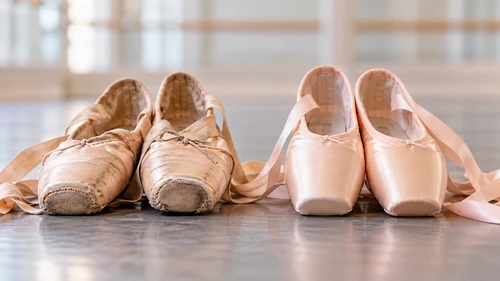
When Should Pointe Shoes Be Replaced? Signs It May Be Time for a New Pair
Posted by 4 Dance on 15th Oct 2026
When Should Pointe Shoes Be Replaced? Signs It May Be Time for a New Pair
Pointe shoes are designed to change as they are worn, so at some point every dancer reaches the same question:
Do I need a new pair yet?
There is no single timetable that works for every dancer. How quickly pointe shoes change depends on the dancer, how often they are worn, the type and intensity of training, the shoe itself and how the fit develops over time.
Rather than relying on a set number of weeks or classes, it is more useful to pay attention to how your shoes look, fit and feel.
If something has noticeably changed, speak to your ballet teacher and consider whether it is time for another fitting.
There Is No Fixed Lifespan for Pointe Shoes
Two dancers wearing the same model of pointe shoe may need to replace them at very different times.
A dancer doing occasional pointe work may naturally get more use from a pair than someone training several times a week. Different shoes also soften and wear differently depending on their construction and how the dancer uses them.
Growing dancers may face another issue: sometimes the shoe has not completely worn out, but the dancer's foot has changed and the original fit is no longer appropriate.
This is why it is better to look for changes in the shoe and its fit rather than expecting every pair to last for a particular number of months.
Signs Your Pointe Shoes May Need Replacing
The Box Feels Noticeably Softer
The box at the front of a pointe shoe gradually changes with use.
If it feels much softer than when the shoes were new, or the shoe no longer feels the same when you are working en pointe, it is worth taking notice.
Do not judge this from appearance alone. How the shoe behaves and feels to you matters too.
If you are unsure whether the change is normal wear or a sign that the shoe should be replaced, ask your teacher or fitter.
The Shank Has Changed
The shank of a pointe shoe also changes as the shoe is worn.
Over time it may become noticeably softer or behave differently under the foot.
Again, this does not mean every dancer needs the same strength of shank or should replace a shoe at exactly the same point.
The important question is whether the shoe is still behaving in the way you and your teacher expect it to.
If it feels significantly different from when it was fitted, that is a useful reason to have it checked.
You Feel Less Stable Than Before
Pay attention if a pair that previously felt familiar begins to feel noticeably different when you are working in it.
For example, the platform may feel less consistent, you may feel that you are sinking further into the shoe, or the shoe may simply no longer feel as stable as it once did.
Those changes do not automatically tell you which new shoe you need, but they are useful signals that the current pair may need reassessing.
Speak to your teacher before continuing to make decisions based only on how old the shoes are.
Your Pointe Shoes No Longer Fit as They Did
Replacement is not only about worn-out shoes.
For younger dancers in particular, feet can change as they grow.
A shoe that was fitted correctly several months ago may begin to feel too short, too tight or simply different.
Other dancers may notice changes after periods of different training intensity or after spending longer away from pointe work.
If the fit has changed, do not assume that buying exactly the same model and size again is automatically the answer.
A new fitting gives you the opportunity to reassess the shoe rather than simply replace it like-for-like.
Should You Replace Pointe Shoes With the Same Model?
Sometimes, yes.
If you have been professionally fitted, your current shoes still suit you and you already know the exact brand, model, size and width you need, replacing them with the same shoe may be straightforward.
You can browse our pointe shoe range to see the current selection available from 4Dance.
But a previous fitting does not mean you need to wear exactly the same pointe shoe forever.
Feet change. Dancers develop. Training changes. Pointe-shoe models may also change over time.
If something feels different, another fitting may be more useful than automatically ordering the same pair.
When Is It Worth Booking Another Pointe Shoe Fitting?
Consider arranging another fitting if:
-
your current shoes feel significantly different from when they were fitted;
-
you think you may have outgrown them;
-
the box or shank feels noticeably softer;
-
you no longer feel as comfortable or consistent in the shoe;
-
your teacher has suggested trying something different;
-
your training or requirements have changed;
-
you are simply unsure whether the current shoe is still appropriate.
A fitting does not mean you will necessarily need a completely different shoe.
It gives you the chance to compare the current pair with other options and discuss what has changed.
4Dance offers specialist pointe shoe fittings from our shop in Byfleet, Surrey, with a multi-brand range available to compare.
Should You Bring Your Old Pointe Shoes to a Refitting?
Yes, where possible.
Your existing or previous pointe shoes can give the fitter useful context.
They show what you have been wearing and make it easier to discuss what has changed since your previous fitting.
Bring the padding or accessories you normally use as well, and tell the fitter clearly what you have noticed.
If one part of the shoe feels different, mention it.
If your teacher has given you specific feedback or asked you to consider a different option, bring that information too.
A refitting should be a conversation about what you are experiencing rather than an attempt to guess what shoe you need before you arrive.
Can You Make Pointe Shoes Last Longer?
Looking after pointe shoes properly can help you get appropriate use from them, but care should not be used as a reason to keep wearing a pair once the fit or behaviour of the shoe has materially changed.
Allow your shoes to dry properly between uses and follow any care guidance supplied with the particular shoe.
Avoid making alterations simply to extend the life of a pair unless they are appropriate for your shoes and your teacher or fitter is comfortable with them.
The aim is not to make pointe shoes last as long as possible.
It is to recognise when they are no longer behaving as expected and make an informed decision about what comes next.
What If These Are Your First Pointe Shoes?
If you have not bought your first pair yet, the process is slightly different.
Your ballet teacher should be your first point of reference about when you are ready to begin pointe work.
Our first pointe shoe fitting guide explains what to expect at your first appointment, what to bring and how to prepare.
For dancers who are already wearing pointe shoes, your teacher remains an important source of guidance when something about the fit or feel of the shoe changes.
Need Help Deciding Whether It Is Time for a New Pair?
You do not need to wait until you are certain your pointe shoes are completely worn out before asking for advice.
If the shoes have changed, your feet have changed, or you simply are not sure whether your current pair is still appropriate, speak to your teacher and consider arranging another fitting.
4Dance offers pointe shoe fittings at our Byfleet shop, where dancers can bring their current shoes, discuss what has changed and compare different options from the available range.
If you already know exactly which shoe you need, you can also browse the current pointe shoe collection online.
The important thing is not to replace pointe shoes according to a calendar.
Pay attention to the shoe, pay attention to how it feels, and ask for advice when something changes.